Plan A3
When Voting Exists — But Conscience Is Missing
Fellow Nigerians,
Nigeria’s democratic crisis is no longer only about turnout.
It is also about decision-making.
Millions of Nigerians already participate in elections, yet many do not truly exercise independent political judgment.
Votes are too often shaped by:
- temporary inducement,
- ethnic pressure,
- religious fear,
- political propaganda,
- or sheer hopelessness.
Citizens vote not because they believe in change, but because they expect disappointment regardless of the outcome.
Plan A3 exists to change this mindset permanently.
Because democracy cannot function properly when participation exists but conviction is absent.
The 29 Million Voting Force Already Inside the System
Nigeria already possesses millions of regular voters capable of determining national outcomes.
Yet much of this power remains fragmented and strategically neutralised.
An estimated:
- 29 million Nigerians participate regularly in elections,
- but many believe their votes change little,
- expect politicians to fail,
- or see elections merely as transactional opportunities.
Ironically, this same voting population is almost double the votes historically required to win presidential elections.
The power already exists.
The problem is that it is divided, manipulated, and insufficiently organised.
“The greatest advantage of bad leadership is not always voter absence — it is divided voter consciousness.”
Why Vote Selling Persists
Vote selling is often misunderstood.
It is not simply ignorance.
It is frequently the combination of:
- poverty,
- desperation,
- political abandonment,
- and loss of collective belief.
Many citizens feel:
- elections bring no lasting improvement,
- politicians disappear after campaigns,
- and survival today matters more than promises tomorrow.
The political establishment understands this psychology well.
That is why temporary inducement becomes a strategic tool.
Because isolated citizens are easier to buy than organised communities.
Plan A3 exists to replace isolation with collective civic discipline.
The Arithmetic of a Sold Vote
A sold vote is never merely an exchange of cash.
It is often an exchange of long-term public wellbeing for short-term survival.
When votes are traded cheaply:
- public hospitals deteriorate,
- schools collapse,
- insecurity expands,
- infrastructure decays,
- and national wealth continues disappearing into private hands.
A temporary inducement today can produce years of national suffering tomorrow.
This is the hidden arithmetic RevNig seeks to expose clearly and repeatedly.
“The cost of a bought vote is often paid later through insecurity, inflation, unemployment, and broken public institutions.”
Nigeria Has Already Proven Unity Is Possible
Nigeria’s democratic history already demonstrates that citizens can rise above division when united by purpose.
The June 12, 1993 election remains one of the clearest examples.
Across ethnic and religious lines, millions of Nigerians voted collectively based on national conviction rather than narrow identity politics.
The lesson remains important:
The problem is not the Nigerian voter.
The problem is the absence of sustained civic organisation.
Plan A3 exists to restore that sense of common democratic purpose.
What Plan A3 Does Differently
RevNig does not merely ask citizens to “vote wisely.”
We seek to change the structure of political behaviour itself.
1. Exposing the True Cost of Inducement
Citizens must clearly understand:
- how vote buying sustains corruption,
- how manipulated elections weaken governance,
- and how short-term inducement produces long-term national damage.
2. Breaking Fear Narratives
RevNig challenges:
- ethnic fear politics,
- religious manipulation,
- and division-based electoral strategies.
Because organised citizens become stronger when united by shared national interest rather than manufactured division.
3. Building Community Accountability
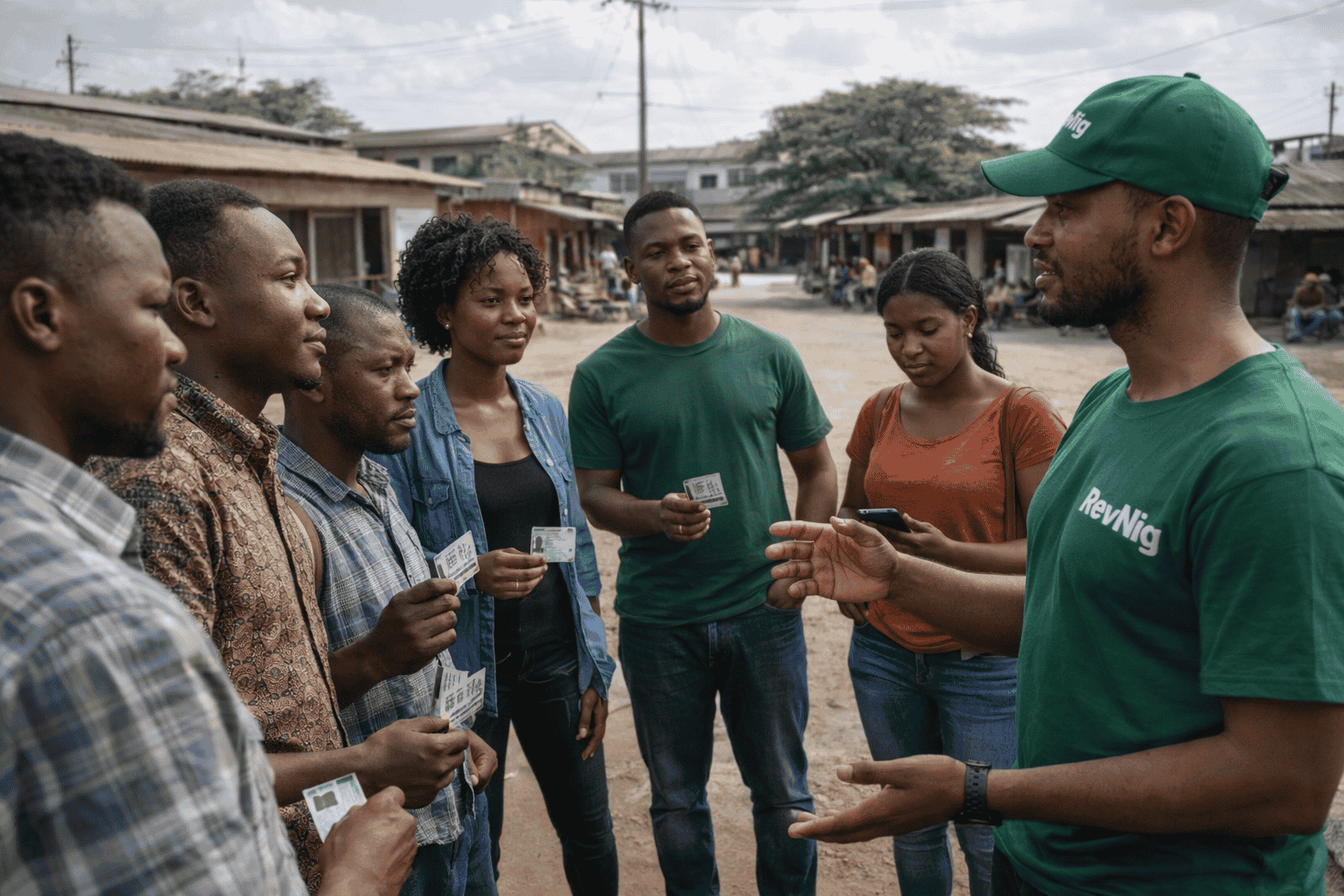
Communities become harder to manipulate when citizens discuss political choices openly and collectively.
RevNig encourages:
- civic conversations,
- peer accountability,
- neighbourhood mobilisation,
- and local democratic awareness.
4. Promoting Strategic Bloc Voting
Plan A3 encourages disciplined civic coordination rather than isolated emotional voting.
Because:
- fragmented voters are vulnerable,
- organised voters become powerful.
From Hesitant Voters to a National Force
Plan A3 transforms:
- emotional voters into strategic voters,
- passive participants into organised citizens,
- and fragmented turnout into disciplined democratic leverage.
This directly strengthens:
- registered voter mobilisation,
- new voter registration,
- diaspora influence,
- and digital coordination.
Together, these pillars form RevNig’s broader national objective:
The 20 Million Voter Force
Related Pages:
- Plan A: How Voters Decide Nigeria
- Plan A1: The Power of Presence
- Plan A2: Registering the Missing Millions
A Message to the Regular Nigerian Voter
Fellow Nigerians,
Your vote is not weak.
It has simply been divided, isolated, and undervalued.
When citizens negotiate individually with political structures, they receive crumbs.
When millions act together, they gain bargaining power.
This is the transformation RevNig seeks to achieve.
From:
- survival voting,
- to strategic voting,
- from isolated participation,
- to organised civic power.
“Democracy changes when citizens stop voting out of fear and begin voting with discipline, awareness, and unity.”
A Direct Call to Nigerians
Reject:
- inducement,
- fear,
- ethnic manipulation,
- and hopelessness.
Vote with awareness.
Vote with discipline.
Vote with conviction.
Join RevNig.
Help build a democratic culture where leadership is earned through competence and accountability — not purchased through desperation.
Never again must Nigerians exchange their collective future for temporary survival.
Mission Vanguard
From inducement → to conviction
From fragmentation → to coordination
From survival politics → to people power
Yes We Will.
What Comes Next
Plan A3 strengthens voter consciousness.
The next phase expands national influence beyond Nigeria’s borders and into the global Nigerian community.
Upcoming Pathways
Plan A4: The 20 Million Multiplier Effect
How Nigerians in the diaspora can influence democratic outcomes at home.
Plan A5: From Connection to Coordination
Harnessing Nigeria’s digital population into a unified civic engine.
Plan A3 restores civic consciousness.
Plan A4 expands democratic reach.
Plan A5 synchronises national coordination.
Together, they form one movement.
Continue Reading
Beyond Nigeria’s borders, millions of Nigerians abroad possess enormous untapped influence capable of reshaping elections at home.
Next: