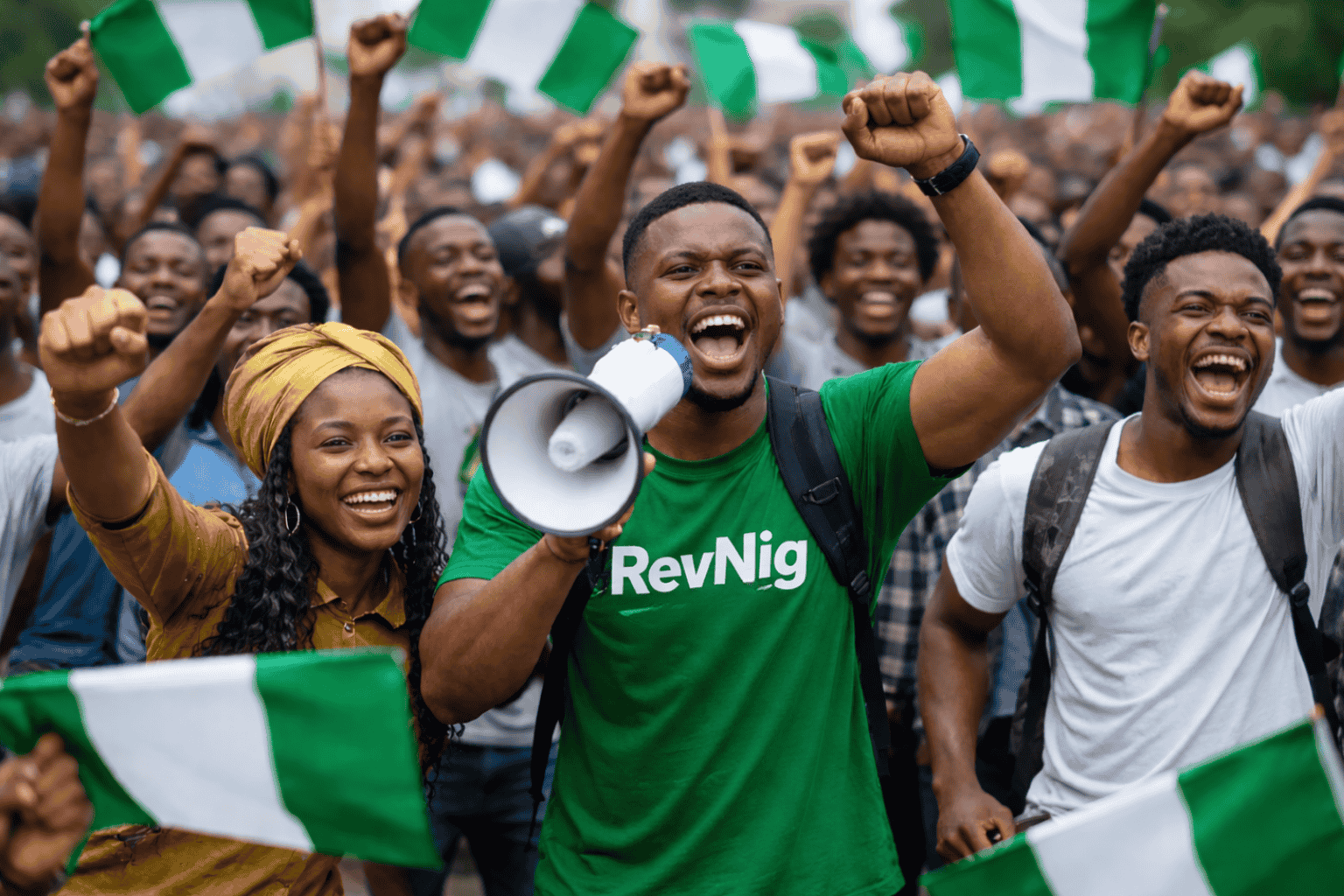
Plan A7
Nigeria’s Future Is Already Old Enough to Decide
Fellow Nigerians,
Nigeria is one of the youngest nations on earth.
Yet its future continues to be controlled by an ageing political culture that has failed generations repeatedly.
This contradiction is not accidental.
It survives because:
- youths remain politically fragmented,
- disorganised,
- distracted,
- or excluded from meaningful decision-making.
Plan A7 exists to end that cycle.
Because no nation can progress when the generation expected to inherit the future is locked out of shaping it.
The Numbers That Make Youth Power Undeniable
Nigeria’s youth population is not a minority.
It is one of the largest democratic forces on the African continent.
Conservative estimates place Nigeria’s youth population at:
- more than 86 million people
This number:
- exceeds the total registered voters in several election cycles,
- and is many times the votes that have historically determined presidential elections.
For comparison:
- presidential victories have repeatedly been secured with approximately 8 — 15 million votes.
This means Nigerian youths already possess enough numerical strength to decide:
- presidential elections,
- governorships,
- legislative contests,
- and local government outcomes.
If organised.
“The greatest untapped political force in Nigeria is not money, power, or incumbency — it is the Nigerian youth population.”
Why Youths Remain Excluded
Nigerian youths are not excluded because they are weak.
They are excluded because they are numerous.
The existing political structure survives by:
- dividing youths along ethnic and religious lines,
- overwhelming them with economic hardship,
- reducing them to campaign instruments,
- and turning many into political thugs rather than political decision-makers.
Plan A7 rejects this exploitation completely.
Because the role of youths in a democracy is not to defend failed systems.
It is to reform them peacefully and intelligently.
Nigerian Youths Already Power the Nation
Despite political exclusion, Nigerian youths already sustain large sectors of the economy.
Young Nigerians:
- drive entertainment and culture,
- dominate telecommunications and digital services,
- power technology and creative industries,
- sustain logistics and innovation,
- and contribute enormously to diaspora remittances.
Yet decisions affecting their future are still made without them.
Policies continue to ignore:
- youth unemployment,
- educational collapse,
- migration pressures,
- housing struggles,
- and economic insecurity.
This imbalance cannot continue indefinitely.
From Victims to Decision-Makers
RevNig is not calling youths into endless outrage without structure.
We are calling youths to:
- organise,
- participate,
- vote,
- and lead.
This transformation begins with:
- voter registration,
- coordinated participation,
- disciplined civic engagement,
- and strategic democratic organisation.
Plan A7 directly strengthens:
- voter mobilisation,
- conviction voting,
- online coordination,
- and local democratic organisation.
Related Plans:
- Plan A2: Registering the Missing Millions
- Plan A3: The 29+ Million Vote Shift
- Plan A6: From Connection to Coordination
Youths Must Not Only Vote — They Must Lead
Nigerian youths are not merely future voters.
They are present-day stakeholders.
Under Nigerian law, citizens aged 25 and above are already eligible to:
- contest elections,
- seek appointments,
- and occupy leadership positions.
Leadership is not inherited permanently by political dynasties.
It is claimed through:
- organisation,
- credibility,
- competence,
- and public support.
RevNig exists to help provide:
- visibility,
- grassroots support,
- organisational coordination,
- and civic credibility for responsible young Nigerians willing to serve.
“A generation that can build industries, innovate digitally, and sustain economies is also capable of helping govern a nation.”
Next Strategic Pathway:
Plan B: Calling Responsible Nigerians to Lead
The Cost of Youth Disengagement
When youths withdraw from democratic participation, the consequences are severe.
Nigeria witnesses:
- mass unemployment,
- dangerous migration routes,
- exploitation abroad,
- criminal recruitment,
- addiction,
- hopelessness,
- and loss of dignity.
These are not merely social failures.
They are political outcomes.
Because leadership decisions determine:
- economic opportunity,
- educational quality,
- public safety,
- and national direction.
When bad leadership persists, young people pay the highest price.
A Direct Message to Nigerian Youths
Fellow Nigerian youth,
Your future will not be handed to you automatically.
It must be claimed:
- peacefully,
- democratically,
- intelligently,
- and collectively.
You already possess:
- the numbers,
- the energy,
- the creativity,
- the technology,
- and the time horizon.
What remains is organisation.
Register.
Mobilise.
Coordinate.
Vote.
Lead.
Join RevNig.
Never again must Nigerian youths watch their future negotiated away by systems that do not prioritise them.
“History changes when young people stop waiting to inherit the future and begin shaping it deliberately.”
Strategic Continuation Path
Plan A7 connects directly with the broader RevNig democratic architecture:
- Plan A5: Local Power — How Organised Communities Can Decide Governance
- Plan A: How Voters Decide Nigeria
- Plan A1–A6: Completing the national voter mobilisation engine
- Plan B: Calling Responsible Nigerians to Lead
Together, these pathways transform youth energy into organised democratic power.
Mission Vanguard
From frustration → to participation
From exclusion → to leadership
From youthful energy → to national transformation
Yes We Will.
Continue Reading
Organising millions of Nigerians to recognise and exercise their democratic power is only the beginning. That power must also be protected where it matters most — at the ballot box. If the electoral process remains vulnerable to manipulation, intimidation and corruption, the collective will of the people can still be undermined.
That is why the next phase focuses on protecting the electoral process, safeguarding the vote and strengthening the integrity of Nigeria’s democracy.
Next:
Plan B — The Electoral Reset: How Nigerians Can Protect Democracy from Manipulation