Plan D2
Proof That Collective Action Works
Fellow Nigerians,
Plan D2 is where trust becomes visible.
After Nigerians have:
- organised politically,
- reclaimed democratic power peacefully,
- and elected responsive leadership,
RevNig activates Plan D2 to demonstrate something many citizens have long stopped believing:
transparent collective action can deliver visible development faster than corruption ever could.
This mission is practical, measurable, local, and verifiable.
Because democratic reform must eventually improve daily life in visible ways.
Plan D2 exists to answer one important national question:
“If Nigerians organise honestly and contribute transparently, what can we actually build together?”
What Plan D2 Is — and What It Is Not
Plan D2 is:
- community-focused,
- needs-driven,
- transparent by design,
- measurable,
- and complementary to responsible government.
It is built around:
- practical solutions,
- local participation,
- and visible public benefit.
Plan D2 Is Not:
- political patronage,
- charity theatre,
- endless fundraising,
- elite-controlled development,
- or a replacement for government responsibility.
This is structured civic development powered by accountability.
Not symbolism.
The Core Principle: Small Contributions, Visible Results
Plan D2 operates on one simple democratic truth:
when citizens trust systems, participation increases.
And when participation increases, impact multiplies.
The model is straightforward:
- many contributors,
- small voluntary contributions,
- clearly defined projects,
- public progress reporting,
- and transparent completion verification.
Trust grows when results become visible repeatedly.
“Communities regain confidence when citizens can physically see where contributions go and what they achieve.”
What Community Crowdfunding Can Achieve
The following examples are realistic illustrations designed to show what organised participation can accomplish over time.
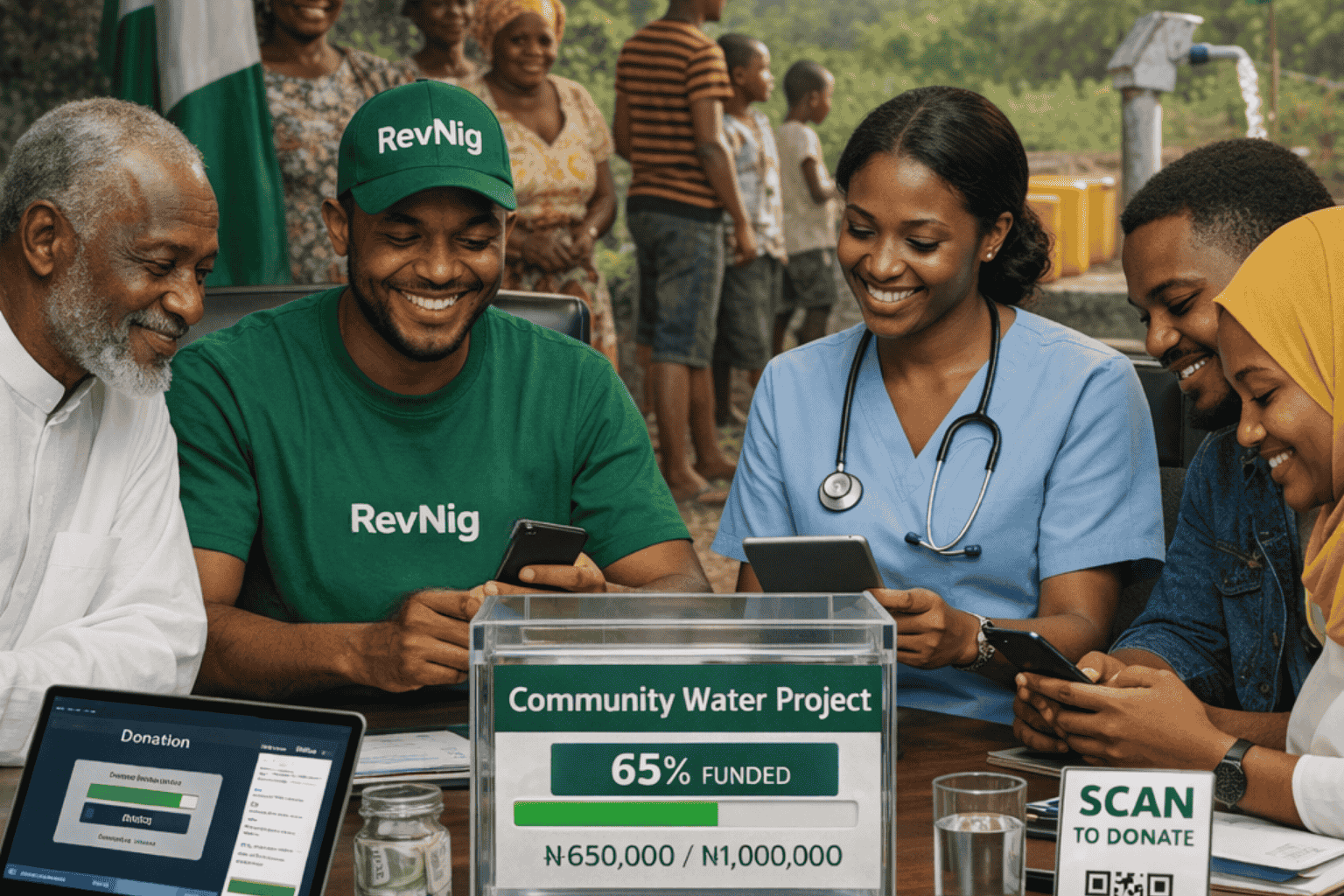
1. Community Water Projects
Many Nigerian communities still lack reliable access to clean water.
Plan D2 can support:
- boreholes,
- water access systems,
- and sustainable local water solutions.
For example:
- modest contributions from large numbers of organised citizens can collectively finance multiple community water projects annually.
The impact includes:
- reduced waterborne disease,
- improved health outcomes,
- and better quality of life for women and children.
This is not theory.
It is logistics supported by transparency.
2. Primary Healthcare Support
Not every community requires massive medical infrastructure immediately.
Many communities simply need:
- functional clinics,
- essential equipment,
- reliable power supply,
- and basic healthcare support.
Plan D2 may help support:
- clinic upgrades,
- solar-powered medical storage,
- essential diagnostic equipment,
- and community healthcare access improvements.
Visible healthcare improvements restore public trust quickly because citizens experience the results directly.
3. Education and Learning Infrastructure
Plan D2 prioritises foundational education because:
nations rise or decline through the quality of their educational systems.
Potential support areas include:
- classroom rehabilitation,
- desks and learning materials,
- sanitation facilities,
- solar lighting,
- libraries,
- and community learning spaces.
Even modest improvements can positively affect thousands of students over time.
Educational investment compounds across generations.
4. Agriculture and Food Security
Plan D2 also supports practical initiatives capable of strengthening:
- local food production,
- agricultural efficiency,
- and community resilience.
This may include:
- cooperative farming support,
- irrigation assistance,
- agricultural training,
- and locally sustainable food systems.
Food security strengthens both:
- economic stability,
- and social stability.
5. Local Innovation and Technology
Communities also contain:
- inventors,
- developers,
- educators,
- and problem-solvers capable of creating scalable local solutions.
Plan D2 encourages projects that:
- solve practical community problems,
- improve productivity,
- and generate measurable social benefit.
Because national transformation also depends on innovation emerging from ordinary Nigerians.
How Projects Are Selected
Plan D2 does not impose projects blindly.
Projects must satisfy clear public-interest standards.
Selection criteria include:
- community-identified needs,
- transparent budgeting,
- feasibility,
- sustainability,
- local participation,
- and measurable public benefit.
Every project must answer four questions clearly:
What problem is being solved?
Who benefits?
How will success be measured?
Who remains accountable?
If those answers are unclear, funding should not proceed.
The Trust Architecture of Plan D2
RevNig understands that trust is everything.
That is why Plan D2 operates under strict accountability principles.
1. Community-Level Custodianship
Projects should involve:
- credible local participants,
- publicly identifiable oversight,
- and replaceable leadership structures where accountability fails.
2. Transparent Fund Reporting
Citizens should be able to understand:
- how much was raised,
- how resources were spent,
- project milestones,
- and completion outcomes.
Transparency protects:
- contributors,
- communities,
- and the movement itself.
3. Independent Oversight
Plan D2 supports:
- civic monitoring,
- public reporting,
- donor visibility,
- and independent review structures.
No secrecy.
No untouchable insiders.
No hidden financial systems.
“Development becomes sustainable when accountability becomes normal.”
Why Plan D2 Strengthens Democracy
Plan D2 does more than improve communities.
It also transforms civic culture.
When citizens begin seeing:
- transparent budgeting,
- measurable outcomes,
- and accountable implementation,
they naturally begin expecting the same standards from government itself.
This helps:
- strengthen democratic expectations,
- weaken tolerance for corruption,
- rebuild public trust,
- and encourage long-term civic responsibility.
Plan D2 therefore functions as:
development through accountability,
and
democratic education through visible results.
How Plan D2 Fits the RevNig Framework
Plan D2 flows directly from:
- Plan A’s people mobilisation,
- Plan B’s leadership preparation,
- Plan C’s democratic protection,
- and Plan D’s development philosophy.
It also strengthens long-term institutional culture by teaching communities how transparent collective action works practically.
The sequence remains clear:
We organise together.
We vote together.
We build together.
We protect what we build.
That is how nations rebuild sustainably.
A Direct Call to Nigerians
Fellow Nigerians,
National transformation does not happen only in government offices.
It also happens:
- in communities,
- through cooperation,
- and through citizens willing to build responsibly together.
RevNig invites Nigerians everywhere to support:
- transparent development,
- accountable community projects,
- and measurable local progress.
Because when citizens trust systems again, national confidence begins to return.
Yes We Will.
Continue Reading
Long-term national development also depends on supporting innovators, entrepreneurs, and problem-solvers capable of creating scalable solutions for Nigeria’s future.
Next: