Plan D3
From Survival to Production
Fellow Nigerians,
Plan D3 is where organised civic participation meets productive economic opportunity.
Nigeria possesses enormous human potential in its young people, entrepreneurs, skilled workers, researchers and innovators.
Yet promising ideas and practical skills often struggle to develop into sustainable enterprises because of limited access to finance, mentorship, infrastructure and reliable business support.
RevNig’s ambition to organise more than 20 million Nigerians creates an opportunity to connect collective participation with practical enterprise development.
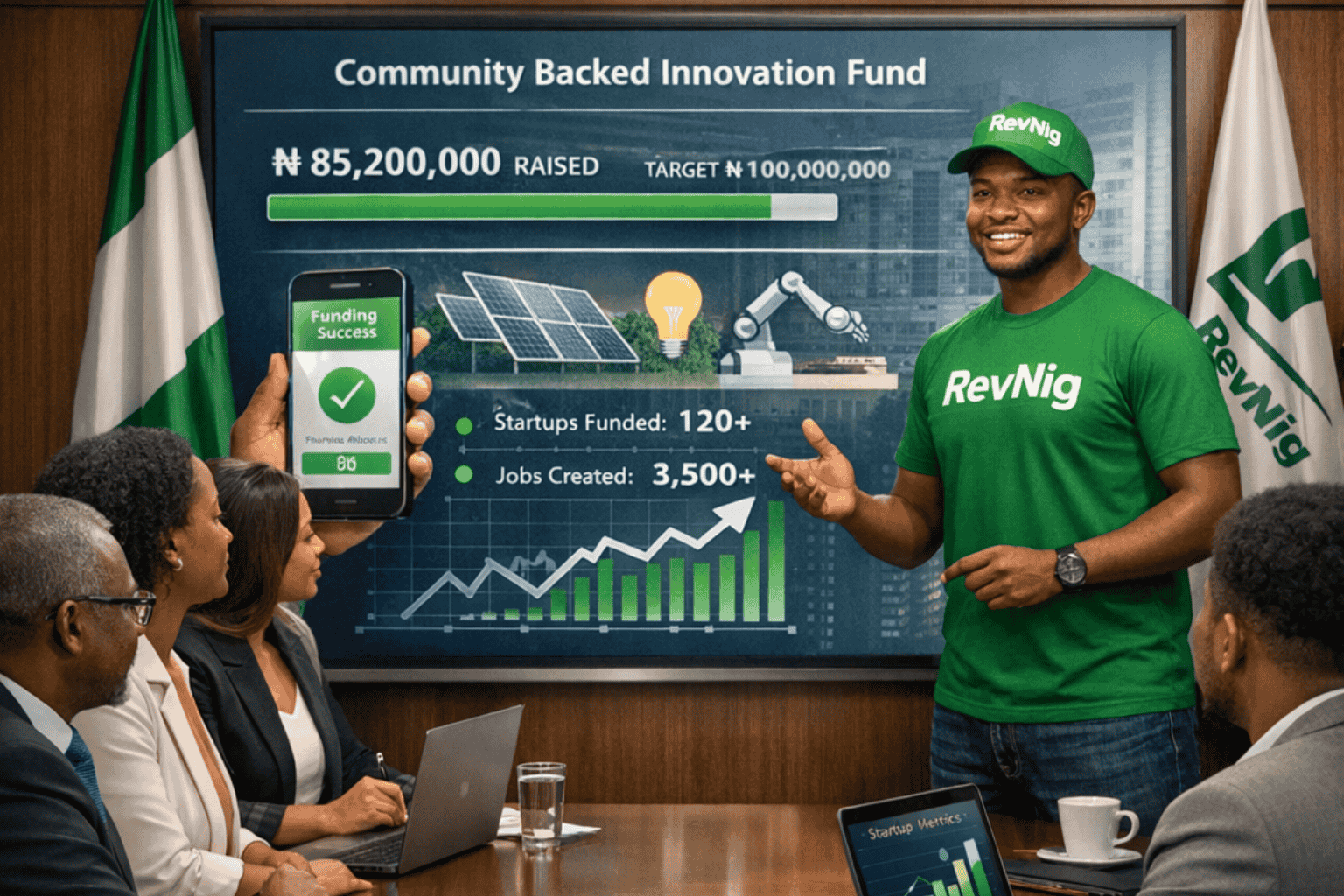
Through Plan D3, RevNig will establish a framework in which members can nominate promising initiatives, participate in transparent online selection processes and support eligible projects capable of creating jobs, improving productivity and solving practical problems.
Every initiative seeking support must satisfy appropriate technical, financial and public-interest requirements before being presented for member voting.
RevNig will also establish procedures through which qualified individuals can be nominated and selected to coordinate approved programmes and monitor their implementation.
Where appropriate, funding will be directed through legally compliant arrangements established for approved initiatives, with clear responsibilities, financial safeguards and accountability requirements.
Plan D3 will seek to transform:
- Talent into productive enterprise,
- Innovation into practical solutions,
- Skills into sustainable livelihoods,
- And entrepreneurial ambition into measurable economic opportunity.
The objective is to help create an economy in which more Nigerians can build, produce, innovate and employ others.
Because lasting national development requires not only responsible governance and community improvement, but also productive economic activity.
What Plan D3 Is — and What It Is Not
Plan D3 is:
- Innovation-focused,
- Youth-inclusive,
- Productivity-oriented,
- Transparent,
- Merit-based,
- And economically practical.
It will provide a framework for identifying and supporting eligible initiatives with the potential to generate sustainable economic and social value.
These may include:
- Small and growing enterprises,
- Practical technological solutions,
- Research and innovation,
- Skills development,
- And job-creating community businesses.
Plan D3 is not:
- A system of political patronage,
- An entitlement to funding,
- A substitute for sound business planning,
- A guarantee of commercial success,
- Or a programme controlled by personal connections.
Members will participate in transparent selection processes, while technical assessment and financial safeguards will help determine which initiatives qualify for support.
Opportunity will be open. Selection will be accountable. Funding will depend on clearly established requirements.
Why Plan D3 Matters
Nigeria’s greatest economic opportunities lie not only in its natural resources, but also in the knowledge, skills, creativity and productive potential of its people.
Many young Nigerians possess:
- Practical skills,
- Business ideas,
- Technical abilities,
- Creative talents,
- And entrepreneurial ambition.
Yet promising individuals and enterprises often face difficulties accessing:
- Affordable finance,
- Professional mentorship,
- Suitable equipment and infrastructure,
- Business development support,
- And opportunities to bring their ideas to market.
Plan D3 will establish a framework through which eligible entrepreneurs and innovators can present practical initiatives for assessment and potential support.
RevNig will combine member participation with transparent selection procedures, professional evaluation and financial accountability.
The central question is:
What becomes possible when promising entrepreneurs gain access to fair opportunities, appropriate resources and accountable support systems?
Plan D3 will seek to turn that possibility into measurable economic and social value.
The RevNig Innovation Model
Plan D3 prioritises:
- practical enterprise,
- local relevance,
- job creation,
- and measurable economic value.
This is not a fantasy-driven startup culture obsessed only with billion-dollar valuations.
It is a nation-building model focused on:
- sustainable growth,
- productivity,
- and economic resilience.
The framework prioritises:
- low-to-medium capital enterprises,
- scalable local solutions,
- and businesses capable of creating direct employment.
Because sustainable economies grow through thousands of productive enterprises — not a handful of elite monopolies.
“Economic transformation begins when citizens move from survival activity to productive value creation.”
Active Participation, Visibility and Trust
RevNig will encourage members to participate actively in the movement’s programmes, community initiatives and organisational activities.
Membership is not intended to be a passive relationship. It is an opportunity to contribute ideas, demonstrate responsibility, develop leadership skills and participate in building a better Nigeria.
Members who contribute meaningfully to RevNig’s activities will have opportunities to become better known within the movement.
Through consistent service, constructive engagement, volunteering, mentoring and responsible participation, they can demonstrate qualities that inspire confidence among fellow members.
This visibility and demonstrated commitment may help their ideas, projects and enterprise proposals attract attention and support during transparent member-selection processes.
RevNig will therefore encourage members to:
- Participate constructively in the movement’s activities,
- Contribute ideas for community and economic development,
- Volunteer their knowledge, experience and professional skills,
- Demonstrate integrity and accountability,
- Support approved programmes and community initiatives,
- And build relationships based on service, cooperation and mutual trust.
Active participation creates opportunities to demonstrate commitment. Consistent service builds credibility. Credibility can inspire confidence.
However, participation alone will not guarantee project selection or financial support.
Every enterprise proposal must satisfy the same published eligibility, technical assessment and financial requirements.
Member voting must remain transparent and fair, without automatic preferential votes or funding privileges based on popularity, seniority or organisational position.
RevNig will seek to recognise genuine contributions while protecting equal opportunities for eligible applicants.
In RevNig, leadership and trust must be earned through service, integrity and demonstrated responsibility.
The objective is to build a movement where active participation strengthens both the individual member and the wider community.
The RevNig Revolving Enterprise Fund
Plan D3 will pursue a sustainable approach to enterprise support through a revolving funding model.
Under this model, eligible enterprises receiving repayable financial support will agree to return the approved funding amount through clearly defined repayment arrangements.
Depending on the nature of the enterprise, repayment may be calculated as an agreed percentage of revenue or through another suitable repayment schedule.
Recovered funds will be paid into a dedicated, transparently managed enterprise fund and made available to support further eligible businesses and innovations.
For example, an enterprise receiving ₦2 million in repayable support could agree to contribute a defined percentage of its monthly revenue until the agreed repayment obligation has been satisfied.
Once recovered, the capital will become available for another approved initiative.
The framework will operate according to essential principles:
- Clear written funding and repayment agreements,
- Affordable repayment arrangements based on business viability,
- Separate and accountable financial records,
- Transparent reporting of repayments and fund balances,
- Appropriate safeguards for business difficulties and defaults,
- And independent verification of fund management.
Not every form of support will require repayment. Grants, training, equipment assistance and other non-repayable support will remain distinguishable from revolving enterprise finance.
One successful repayment can help create another opportunity. Recovered capital can continue supporting productive enterprise.
The objective is to build a sustainable system in which financial resources are responsibly reused to expand economic opportunity over time.
What Plan D3 Can Support
Plan D3 will focus on initiatives capable of creating measurable economic or social value.
The following areas illustrate the types of enterprises and innovations that can be considered.
1. Youth-Led Small Enterprises
Plan D3 will consider practical enterprises operating in sectors such as:
- Agro-processing,
- Food production,
- Logistics,
- Repair and maintenance services,
- Renewable energy,
- Recycling,
- Light manufacturing,
- And construction support services.
Support will focus on eligible enterprises with realistic business plans, responsible management and identifiable opportunities for productive growth.
Small enterprises can strengthen local supply chains, create employment and improve household livelihoods.
2. Technology Solving Nigerian Problems
Plan D3 will consider technological innovations designed to address practical economic and social challenges.
Potential areas include:
- Local logistics systems,
- Agricultural marketplaces,
- Healthcare administration tools,
- Educational technology,
- Civic accountability platforms,
- Infrastructure monitoring,
- And digital tools that improve business productivity.
Technology projects must demonstrate practical relevance, responsible data management and a credible implementation plan.
Innovation must solve identifiable problems — not merely attract publicity.
3. Research, Creativity and Skilled Industries
Plan D3 will also recognise productive opportunities beyond conventional technology start-ups.
Eligible initiatives could include:
- Applied research,
- Creative industries,
- Skilled trades,
- Industrial design,
- Media production,
- Educational content development,
- And practical technical training.
Support arrangements could include:
- Research grants,
- Training facilities,
- Shared equipment,
- Fabrication spaces,
- Creative production facilities,
- And professional mentorship.
Every supported initiative must demonstrate a clear purpose, accountable management and measurable outcomes.
The objective is not simply to fund ideas. It is to help viable ideas become productive activities that create lasting value.
Creativity becomes economically transformative when structure meets opportunity.
How Projects Qualify
Plan D3 will support eligible enterprises and innovations through transparent, merit-based selection procedures.
Every initiative seeking support must demonstrate:
- A clearly defined problem or market opportunity,
- A practical and credible solution,
- A realistic business or implementation plan,
- The competence and integrity of its management,
- Measurable economic or social value,
- A reasonable understanding of financial and operational risks,
- And willingness to comply with applicable reporting and accountability requirements.
Where repayable support is requested, applicants must also demonstrate a credible capacity to meet the proposed repayment obligations.
1. Application and Nomination
Eligible entrepreneurs will be able to submit proposals through the approved programme.
RevNig members will also be able to nominate promising initiatives for consideration, with the consent of the individuals or organisations concerned.
2. Preliminary Screening
Applications will undergo eligibility checks to establish whether they meet the programme’s published requirements.
3. Professional Assessment
Qualified reviewers will assess the proposals according to relevant technical, commercial, financial and public-interest criteria.
Only initiatives that satisfy the established assessment requirements will proceed to member selection.
4. Transparent Member Voting
Eligible members will participate in online voting to determine which qualified initiatives receive priority for support.
The voting process must protect fairness, transparency and the integrity of individual votes.
Applicants will have opportunities to present their ideas and explain their proposed benefits through approved, reasonably accessible channels.
5. Funding Approval and Agreements
Selected initiatives will undergo final due diligence before financial support is approved.
Every funding arrangement must clearly establish:
- The amount and purpose of support,
- Whether the support is repayable or non-repayable,
- The conditions governing disbursement,
- The applicable repayment obligations, where relevant,
- The reporting and verification requirements,
- And the procedures for addressing non-performance or misuse.
6. Implementation and Accountability
Approved initiatives will be monitored against agreed objectives and milestones.
Recipients must provide appropriate financial and operational reports.
Where support is repayable, recovered funds will be returned to the designated revolving enterprise fund for further approved initiatives.
RevNig will promote enterprise opportunities through a combination of fair member participation, professional assessment, responsible financing and continuing accountability.
The Trust Architecture of Plan D3
RevNig recognises that enterprise development requires more than access to capital.
It requires integrity, professional competence, responsible financial management and continuing accountability.
Plan D3 will therefore establish a transparent framework for selecting eligible enterprises, approving financial support, monitoring implementation and recovering repayable funding for future initiatives.
The framework will operate through five essential safeguards.
1. Transparent Applications and Independent Assessment
Eligible entrepreneurs and innovators will be able to submit proposals for consideration.
RevNig members will also be able to nominate promising initiatives, subject to the consent of the individuals or organisations concerned.
Every application must satisfy published eligibility requirements.
Qualified professionals will assess proposals according to:
- Technical feasibility,
- Financial viability,
- Management competence,
- Employment and productivity potential,
- Economic or social value,
- And identifiable risks.
Professional assessment must remain independent of personal connections, organisational influence and political considerations.
Only proposals satisfying the established requirements will proceed to member voting.
2. Fair Member Voting and Programme Leadership
Eligible RevNig members will participate in transparent online voting to determine which qualified initiatives receive priority for support.
Members will also have opportunities to nominate and elect individuals of proven integrity and relevant competence to coordinate approved enterprise-support programmes.
These coordinators will operate under defined responsibilities and accountability requirements.
Their role will be to support programme administration, monitor compliance and review implementation.
They will not automatically acquire ownership or management control of businesses receiving assistance.
Member voting must remain free, transparent and protected against manipulation.
3. Responsible Funding and the Revolving Enterprise Fund
Plan D3 will distinguish between non-repayable assistance and repayable enterprise support.
Where an enterprise receives repayable funding, the recipient must enter into a clear written agreement establishing the amount provided, the permitted use of funds and the applicable repayment arrangements.
Repayment may be structured as an agreed percentage of business revenue or another appropriate schedule, subject to affordability, commercial feasibility and applicable legal requirements.
Recovered capital will be paid into an appropriately established, dedicated revolving enterprise fund.
Subject to the fund’s approved rules and financial obligations, recovered amounts will become available to support further eligible initiatives.
The revolving fund must maintain proper financial records and operate under appropriate controls.
No programme coordinator or funding recipient will have unrestricted personal control over the fund.
4. Milestone-Based Support and Financial Monitoring
Where appropriate, financial support will be released in stages according to agreed implementation milestones.
Recipients must demonstrate responsible use of previously released funds before additional support is authorised.
Monitoring arrangements will include:
- Approved budgets and expenditure records,
- Implementation milestones,
- Financial and operational progress reports,
- Verification of agreed outputs,
- Repayment records where applicable,
- And procedures for identifying and addressing irregularities.
Repayment arrangements must also recognise legitimate commercial difficulties.
Business failure does not automatically establish dishonesty or misconduct.
However, deliberate misrepresentation, diversion of funds and fraudulent reporting must trigger appropriate corrective action.
5. Independent Oversight and Public Accountability
RevNig will establish oversight procedures proportionate to the financial value and risks of supported initiatives.
These will include appropriate independent review, conflict-of-interest safeguards, complaints procedures and financial verification.
The programme will publish suitable summaries of:
- Approved initiatives,
- Funding commitments and disbursements,
- Implementation progress,
- Reported outcomes,
- Repayments received,
- And the financial position of the revolving fund.
Public reporting must respect legitimate commercial confidentiality and applicable privacy requirements.
Programme coordinators and funding recipients must remain accountable under their respective agreements.
Where serious misconduct is established, appropriate corrective action will be taken, including suspension, recovery action or referral to the relevant authorities when warranted.
Trust will determine responsibility. Transparency will protect contributions. Accountability will sustain opportunity.
Plan D3 will seek to ensure that enterprise support produces measurable value while recovered resources continue creating opportunities for others.
“Innovation becomes sustainable when accountability grows alongside opportunity.”
Why Plan D3 Strengthens Nigeria
Plan D3 will seek to strengthen Nigeria’s productive economy by helping eligible entrepreneurs transform practical ideas and skills into sustainable economic activity.
Its principal objectives include:
- Creating employment opportunities,
- Supporting small and growing enterprises,
- Improving productivity,
- Encouraging practical innovation,
- Strengthening local supply chains,
- And developing entrepreneurial competence.
By connecting organised citizens with promising enterprises, professional assessment and accountable funding arrangements, Plan D3 can contribute to a stronger environment for productive investment.
The revolving enterprise fund will introduce an additional dimension of sustainability.
Instead of relying exclusively on new contributions for every initiative, recovered capital will be available for further approved enterprise support.
This creates the potential for successive rounds of economic opportunity.
A business supported today may eventually repay its funding, allowing another entrepreneur to receive assistance tomorrow.
Over time, successful initiatives may contribute to employment, household incomes, skills development and stronger local economic activity.
These outcomes will depend on enterprise performance, responsible programme management and wider economic conditions.
Economic transformation requires productive citizens, credible institutions and opportunities that can be sustained.
RevNig will pursue these objectives through organised participation, fair selection, accountable financing and measurable results.
This is how nations become producers rather than dependents.
How Plan D3 Fits the RevNig Framework
Plan D3 connects productive economic development with RevNig’s wider programme for democratic and national transformation.
Plan A
Mobilises and organises citizens to participate collectively in democratic and national development activities.
Plan B
Promotes credible electoral processes and protects democratic participation.
Plan C
Establishes standards for evaluating responsible leadership and encourages accountability in public life.
Plan D1
Encourages lawful, voluntary support for credible democratic leadership and the continuity of reform efforts.
Plan D2
Enables members to identify community needs, select development projects and elect accountable project managers.
Plan D3
Connects eligible entrepreneurs and innovators with transparent selection processes, appropriate financial support and continuing accountability.
Through its proposed revolving enterprise fund, Plan D3 will seek to recover repayable capital and make it available for successive enterprise initiatives.
RevNig’s ambition to organise more than 20 million Nigerians creates the potential for broad participation in these activities.
We organise citizens. We strengthen democracy. We promote credible leadership. We build communities. We support productive enterprise.
A Direct Call to Nigerian Youths
Fellow Nigerians,
Nigeria’s future will not be built by government alone.
It will also be built by the creativity, determination, skills and productive contributions of millions of Nigerians who are willing to take responsibility for their country’s development.
Your ideas matter.
Your skills matter.
Your creativity matters.
Your participation matters.
RevNig believes that organised citizens can create opportunities that isolated individuals may struggle to achieve.
Through Plan D3, we will work towards a system in which promising entrepreneurs and innovators can present their ideas, undergo transparent assessments and seek support through fair member participation.
We encourage young Nigerians to become active members of RevNig, contribute meaningfully to its activities and demonstrate their commitment to building a better Nigeria.
Your participation in community initiatives, volunteering, mentoring, constructive discussions and other activities can help fellow members recognise your abilities, integrity and dedication.
That visibility can help your ideas attract attention and confidence.
However, enterprise support will remain subject to published eligibility requirements, professional assessment, transparent voting and financial accountability.
Building Opportunities That Continue Beyond One Entrepreneur
Plan D3 will also pursue a revolving enterprise funding system.
Under this arrangement, businesses receiving repayable support will agree to return the approved funding amount according to clearly established terms.
Recovered capital will be made available to support other eligible enterprises.
This means that an entrepreneur who receives support today can help create an opportunity for another entrepreneur tomorrow.
It is a model built on responsibility, sustainability and collective progress.
We invite Nigerians everywhere to contribute their ideas, skills, experience and resources towards building an economy that rewards productive effort and responsible enterprise.
Let us build a movement in which:
- Participation creates opportunities to demonstrate commitment,
- Integrity strengthens trust,
- Innovation solves practical problems,
- Enterprise creates productive employment,
- And recovered financial support helps create further opportunities.
Let us transform our collective strength into productive national development.
Let us build opportunities that continue from one generation of entrepreneurs to another.
Yes We Will.
Be part of the movement for a more productive, accountable and prosperous Nigeria.
Join RevNig, participate in its activities, contribute your ideas and help build opportunities that benefit Nigerians today and in the future.
Continue Reading
A culture of transparent contribution becomes strongest when citizens support projects directly and visibly — seeing exactly where their contributions go and what they achieve.
Next: